
WELCOME BONUS 300%
UP TO €2000 + 100
FREE SPINS
UP TO €2000 + 100
FREE SPINS
Home → Roulette
Roulette at 7k Casino
36 Instead of 37: The Math Behind 35:1
The Straight bet on the European Roulette variant pays 35:1, which aligns with the 37 sectors including a single zero. This payout structure creates a house edge of 2.70% because the true odds are 36 to one against hitting the specific number. Consequently, every wager placed on this straight line loses value over time due to that mathematical disadvantage.
In contrast, the American Roulette wheel features 38 sectors with both a zero and a double zero, yet it still offers only 35:1 for a Straight win. This discrepancy inflates the house advantage to 5.26%, making it significantly more expensive to play than the European version. Players choosing this variant face a much steeper climb to maintain their bankroll during extended sessions.
The Five Number Bet in American Roulette covers five sectors but pays only 6:1, resulting in a massive 7.89% house edge. This specific wager is considered a trap because its disadvantage is nearly double that of other standard bets on the same table. Avoiding this particular option is crucial for any player aiming to minimize losses while spinning the wheel.
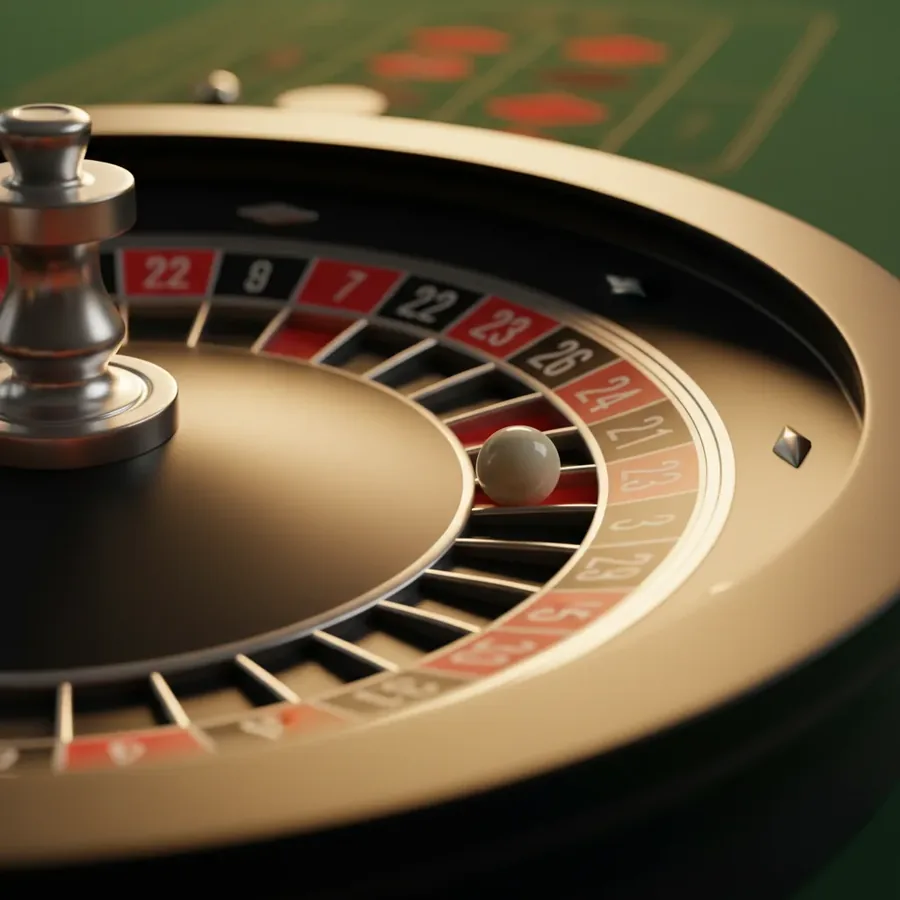
Mobile Tables: Which Betting Fields Become Smaller
The Auto Roulette Classic 1 Live by Authentic Gaming supports wagers ranging from 0.10 EUR up to 2,000 EUR on mobile devices. This wide betting range allows players to adjust their stakes comfortably whether they are testing strategies or playing high-limit tables. The interface ensures that all betting fields remain accessible and functional across different screen sizes and operating systems.
Quantum Roulette by Playtech operates within a stake window of 0.10 EUR to 5,000 EUR, offering higher limits for premium users. The integration of Quantum Multipliers up to 500x adds volatility to these standard betting fields, changing the potential payout dynamics significantly. Mobile users must ensure their device can handle the increased graphical load without compromising the speed of bet placement.
Blaze Roulette by Authentic Gaming restricts bets between 0.20 EUR and 5,000 EUR, requiring a slightly higher minimum entry than some competitors. The live host availability from 19:00 to 01:00 CEST dictates when these specific mobile tables are active for real-money play. Players should schedule their sessions accordingly to avoid encountering unavailable markets during off-peak hours on their phones.
Only 10 Percent Contribution: What are the Consequences?
Tischspiele contribute only 10 percent toward the bonus turnover requirement for the 300% welcome bonus up to 2,000 EUR plus free spins. This low contribution rate means that every 100 EUR wagered counts as just 10 EUR toward clearing the mandatory playthrough conditions. Players must therefore bet ten times more on roulette than they would on slots to meet the same target.
A 40x wagering requirement on a 2,000 EUR bonus equals 80,000 EUR in total turnover needed before withdrawal eligibility. Since roulette contributes only 10 percent, players need to place actual bets totaling 800,000 EUR to satisfy this condition. This mathematical reality makes clearing bonuses via table games an extremely inefficient strategy compared to high-contribution slot titles.
The 100 free spins attached to the offer likely have separate terms, but the main cash bonus demands substantial volume through table games. With a house edge of 2.70% on European roulette, the expected loss during this massive turnover process erodes the initial bonus significantly. Many players find the effort required disproportionate to the remaining value after fulfilling such steep requirements.
Live Table vs RNG Table: Rounds per Hour
Auto Roulette Classic 1 Live operates with an automatic wheel, allowing for a faster pace of gameplay compared to traditional human-dealt tables. This automation typically results in approximately 60 to 70 rounds per hour, depending on the betting window duration set by the studio. Faster rounds increase the hourly cost of play due to the compounding effect of the 2.70% house edge on each spin.
Standard RNG European Roulette variants generally process spins even quicker, often exceeding 100 rounds per hour due to the lack of physical dealing delays. This higher frequency accelerates the consumption of a player's bankroll when applying flat betting strategies over extended periods. The theoretical RTP of 97.30% remains constant regardless of speed, but variance realization occurs much faster in digital formats.
Live dealer tables like Blaze Roulette involve human interaction and physical ball release, slowing the cycle to roughly 40 to 50 rounds per hour. This slower tempo allows players more time to analyze patterns and manage their stake limits between consecutive bets. The reduced round count helps mitigate rapid losses, providing a more controlled environment for strategic experimentation.
D'Alembert and Fibonacci Against the Same Table Limit
The D'Alembert system increases stakes by one unit after a loss and decreases by one unit after a win, relying on equilibrium assumptions. When applied to Blaze Roulette with a maximum limit of 5,000 EUR, this progression can quickly exhaust the table cap during losing streaks. The system fails to overcome the 2.70% house edge, leading to net losses despite the structured betting approach.
The Fibonacci sequence progresses through the series 1, 1, 2, 3, 5, 8, etc., moving back two steps upon a win. On Auto Roulette Classic 1 Live with a 2,000 EUR limit, long losing runs force the bet size beyond the maximum allowable stake. This constraint breaks the mathematical logic of the system, leaving the player unable to recover previous losses effectively.
Both progression strategies ignore the independent nature of each spin, where the probability remains fixed at 2.70% for European wheels. Applying these methods to Quantum Roulette with multipliers up to 500x introduces extreme variance that standard progression models cannot predict or manage. Relying on historical patterns to influence future outcomes is a fundamental error in understanding random number generation and live physics.
Roulette bet types at a glance
| Bet | Payout | Win Chance | Numbers Covered | House Edge |
|---|---|---|---|---|
| Roulette Amerikanisch – Five Number Bet (0, 00, 1, 2, 3) | Five Number 6:1 (deckt 5 von 38 Sektoren) | 92.11% | Einzige Wette am amerikanischen Rad mit Edge über 5,26% – „Fallenwette“. Kein Äquivalent am europäischen Rad | 7.89% |
| Roulette Französisch, innere Einsätze (La Partage gilt nicht) | Straight 35:1, Split 17:1, Street 11:1, Corner 8:1, Six Line 5:1, Dozen 2:1, Column 2:1 | 97.30% | Rad gleich (37 Sektoren), aber La Partage/En Prison gilt nicht für innere Einsätze – Edge bleibt europäisch | 2.70% |
| Roulette Europäisch (einfache Null, 37 Sektoren) | Straight 35:1, Split 17:1, Street 11:1, Corner 8:1, Six Line 5:1, Dozen 2:1, Column 2:1, Rot/Schwarz 1:1, Odd/Even 1:1, 1-18/19-36 1:1 | 97.30% | 37 Sektoren (1–36 + 0); Auszahlungen wie für 36 Sektoren – daher konstanter Edge auf ALLE Wetten | 2.70% |
| Roulette Französisch mit La Partage (gerade Chancen) | Rot/Schwarz 1:1 (bei 0 Rückerstattung 50%), Odd/Even 1:1, Low/High 1:1; Innere Einsätze ohne La Partage: Straight 35:1, Split 17:1, Street 11:1, Corner 8:1 | 98.65% | Bei 0 wird die Hälfte des Einsatzes auf gerade Chancen zurückerstattet (Rot/Schwarz, Pair/Impair, Manque/Passe). En Prison gibt denselben 1,35%. Regel gilt NUR für gleiche Einsätze | 1.35% |
| Roulette Amerikanisch (doppelte Null, 38 Sektoren) | Straight 35:1, Split 17:1, Street 11:1, Corner 8:1, Six Line 5:1, Dozen 2:1, Column 2:1, Rot/Schwarz 1:1 | 94.74% | 38 Sektoren (1–36 + 0 + 00); Auszahlungen wie beim europäischen Rad, aber der zusätzliche Sektor verdoppelt den Hausvorteil | 5.26% |
Even Chances vs Straight: Variance Comparison
Roulette Französisch mit La Partage offers a house edge of 1.35% for even money bets, which is the lowest risk profile among standard roulette variants. This figure stands in sharp contrast to the straight bet on the same wheel, where the player faces a 2.70% house edge without any partial refund mechanism on zero. The difference means that chasing high payouts on single numbers increases volatility significantly compared to stabilizing returns with red or black wagers.
Straight bets pay out at odds of 35:1, covering only one specific number out of the 37 sectors on the European wheel. In comparison, even chance bets like Red/Black also pay 1:1 but cover 18 winning sectors, effectively doubling the probability of a win per spin. This structural disparity forces players to choose between frequent small wins and rare large payouts when managing their bankroll.
The payout structure for inner bets remains constant across variants, with Split bets paying 17:1 and Street bets paying 11:1. However, the presence of La Partage on even chances reduces the effective loss rate on zero from 100% to 50%, a benefit absent for corner bets or six-line wagers. Consequently, strategic play favors outer bets for longevity, while inner bets serve as high-variance exceptions rather than steady income sources.
50 Euro Budget at a 1 Euro Table
Auto Roulette Classic 1 Live allows bets starting at 0.10 EUR, meaning a 50 EUR budget can sustain up to 500 spins if wagered on single numbers. This duration extends further when placing bets on dozen options, which cover three columns and reduce the frequency of total capital loss per round. The minimum stake ensures that the initial deposit is not depleted by a single unlucky outcome in the early stages of the session.
Straight bets require a 1 EUR wager to match the table limit context, resulting in a potential loss of the entire stake upon a miss. With a house edge of 2.70%, the expected value per spin is negative, gradually eroding the 50 EUR balance over hundreds of rounds. Players must account for this mathematical decay when planning how many betting cycles their budget can realistically support before exhaustion.
Table games contribute only 10% toward the wagering requirement for the 300% welcome bonus up to €2,000, making roulette inefficient for clearing free funds. A 50 EUR deposit yields a 150 EUR bonus, creating a turnover target of 4,000 EUR that requires substantial volume on low-contribution games. This restriction forces players to either accept slower progress or switch to higher-contribution slots to meet the bonus conditions efficiently.
How Payout Odds 35:1 Are Achieved
A Straight bet pays 35:1 because the casino retains a mathematical advantage derived from the 37 or 38 sectors on the wheel. On the European wheel with 37 sectors, the true odds of hitting a single number are 36:1, but the payout is reduced by one unit to create the 2.70% house edge. This difference ensures that the operator profits over time while offering players a fixed return regardless of the specific number chosen.
American Roulette introduces a double zero, expanding the wheel to 38 sectors and increasing the house edge to 5.26% for straight bets. Although the payout remains 35:1, the probability of winning drops to approximately 2.63%, nearly halving the player's chances compared to the European variant. This structural change demonstrates how adding an extra sector directly impacts the fairness of the fixed 35:1 payout ratio.
Quantum Roulette modifies the standard 35:1 payout through random multipliers that can reach up to 500x on winning straight bets. These multipliers are applied to the base payout, potentially turning a 35:1 return into a much larger sum during lucky spins. However, the underlying probability of hitting the number remains unchanged, meaning the long-term expectation is still governed by the base game mechanics.
Max Bet Per Number vs. Max Bet Per Round
Blaze Roulette imposes a maximum bet limit of 5,000 EUR per round, which applies to the total stake placed on all combinations within a single spin. This cap prevents players from overwhelming the table with excessive volume, ensuring that the casino's liability remains controlled during high-stakes sessions. The limit applies regardless of whether the player places a single straight bet or multiple split and corner bets simultaneously.
Auto Roulette Classic 1 Live sets a lower maximum bet of 2,000 EUR per round, reflecting its automated nature and different risk management strategy. This restriction is half the limit found on Blaze Roulette, indicating that Authentic Gaming adjusts stakes based on the specific game format and host availability. Players seeking higher limits must navigate to tables with live human dealers rather than relying on automated classics.
The distinction between max bet per number and per round affects strategy when using progressive systems or covering multiple sections of the wheel. Since the round limit caps the total exposure, spreading bets across dozens and columns quickly approaches the 5,000 EUR ceiling on Blaze Roulette. Understanding this constraint helps players optimize their coverage without accidentally violating table rules during rapid-fire betting sequences.
Wheel Speed and Ball Toss in Real Wheel
Live tables utilize real wheels where the physical speed of the ball and the croupier's toss technique introduce natural variance into every spin. Unlike digital RNG games, the mechanical interaction between the ball and the numbered pockets creates unpredictable outcomes that cannot be perfectly modeled by RTP alone. This physical element adds a layer of authenticity that distinguishes live dealer roulette from its virtual counterparts in terms of player perception.
The Blaze Roulette host operates between 19:00 and 01:00 CEST, providing a structured environment where professional dealers manage the wheel speed consistently. This scheduled availability ensures that players have access to regulated gameplay during peak hours, with the dealer's skill influencing the consistency of the ball toss. The human factor mitigates the randomness of pure automation while maintaining the integrity of the game's mathematical expectations.
Quantum Roulette employs a similar physical wheel but integrates digital overlays that trigger multipliers based on the final resting position of the ball. The speed of the wheel does not alter the probability of landing on a specific sector, but it determines which quantum multiplier, if any, is activated. This hybrid approach combines traditional physical randomness with modern digital enhancements to increase potential payouts beyond the standard 35:1 odds.
What Straight, Split, and Street Practically Mean
The Straight bet covers a single number on the roulette wheel with a payout ratio of 35:1. This specific wager carries a house edge of 2.70% on European wheels because it ignores the La Partage rule applied to outside bets. Players lose their entire stake if the ball lands on zero, unlike even-money wagers which retain half their value under French conditions.
A Split bet allows players to cover two adjacent numbers by placing chips on the dividing line for a 17:1 return. The house edge remains constant at 2.70% across all standard European wheel configurations regardless of the specific combination chosen. This consistency ensures predictable long-term loss rates compared to American variants where the double zero increases the mathematical disadvantage significantly.
The Street bet spans three consecutive numbers in a row offering an 11:1 payout multiplier upon success. Table games contribute only 10% toward the bonus turnover requirement, making these high-edge bets inefficient for clearing the €2,000 welcome bonus. Consequently, focusing on slots or other higher-contribution games is mathematically superior for players aiming to unlock their promotional funds effectively.
How Long a Session May Last
Auto Roulette Classic 1 Live features an automated wheel that operates continuously without human intervention or significant delays between spins. With betting limits ranging from 0.10 EUR to 2,000 EUR, sessions can extend indefinitely based on player bankroll management strategies and risk tolerance levels. The consistent pace allows for precise calculation of hourly loss rates using the fixed 97.30% RTP figure provided by Authentic Gaming.
Blaze Roulette introduces a live host who manages the game during specific hours from 19:00 to 01:00 CEST every evening. This restricted availability means players cannot access this particular table variant outside the designated four-hour window each day. The maximum payout cap of 35:1 applies to all winning combinations, limiting potential returns regardless of the size of the initial stake placed by the participant.
Quantum Roulette utilizes Playtech software to inject random multipliers up to 500x onto selected numbers before each spin occurs. These unpredictable boosts drastically alter the variance profile compared to standard tables, potentially extending session duration through intermittent large wins. Betting ranges span from 0.10 EUR to 5,000 EUR, accommodating both conservative testers and high rollers seeking amplified volatility effects.
Error: 10 Percent Contribution to Wagering Missed
Tischspiele contribute merely 10 percent toward fulfilling the wagering requirements attached to the 300% welcome bonus offer up to €2,000. This low percentage severely penalizes players who allocate a significant portion of their bankroll to roulette tables instead of eligible slot machines. Clearing the bonus through table games requires ten times more turnover than playing slots, which typically contribute 100% to the same obligation.
The French Roulette variant offers a reduced house edge of 1.35% for even-money bets due to the La Partage rule. Despite this mathematical advantage, the 10% contribution rate makes it inefficient for bonus clearance compared to games with higher weighting percentages. Players should calculate the total turnover needed carefully, as the combined effect of lower edges and poor contribution rates creates a substantial barrier to withdrawal eligibility.
European Roulette maintains a standard house edge of 2.70% while also suffering from the restrictive 10% bonus contribution limitation. This combination forces players to generate excessive volume to convert promotional credits into withdrawable cash, often resulting in net losses exceeding the initial deposit amount. Strategic planning must prioritize high-contribution categories to avoid wasting time and resources on mechanically favorable but administratively penalized gaming options.
Latency and Betting Window in Live Stream
Live dealer streams from providers like Authentic Gaming introduce variable latency depending on internet connection stability and server load conditions. Bettors must account for this delay when placing wagers, as the closing time for bets may occur slightly before the visual cue indicates. Understanding this temporal gap prevents disputes regarding late entries and ensures participants align their actions with the actual operational state of the digital interface.
The betting window for Auto Roulette Classic 1 Live closes automatically after a set period determined by the software algorithm rather than a dealer. This automation eliminates human error in timing but requires strict adherence to displayed countdowns to ensure valid placement of stakes. Participants utilizing this format benefit from predictable pacing, allowing them to calculate expected losses per hour based on the fixed 97.30% return to player statistic.
Quantum Roulette employs complex algorithms to determine multiplier applications instantly, creating a seamless integration of chance and visual effects within the stream. The maximum bet limit of 5,000 EUR allows high-stakes players to engage fully without interruption, though latency might affect the perception of real-time outcomes. Ensuring stable connectivity is crucial to capture these high-value moments accurately without missing critical data points generated by the Playtech engine.
French with La Partage vs European
French Roulette with La Partage reduces the house edge on even-money bets to 1.35% by refunding half the stake on zero. This rule applies exclusively to Red/Black, Odd/Even, and Low/High wagers, leaving inside bets unaffected at the standard 2.70% edge level. The distinction highlights how specific rule variations create divergent mathematical profiles within the same game category depending on the type of wager placed.
European Roulette lacks the La Partage mechanism, maintaining a uniform 2.70% house edge across all thirty-seven sectors of the wheel. Every bet type, from Straight-ups to Dozens, faces identical statistical disadvantages compared to the French variant's selective advantages. This uniformity simplifies strategy calculations but results in higher overall costs for players relying heavily on outside bets that would otherwise benefit from partial refunds.
The American Roulette variant introduces a double zero sector, increasing the total pockets to thirty-eight and raising the house edge to 5.26%. This structural change doubles the disadvantage compared to European wheels, making the Five Number Bet particularly dangerous with a staggering 7.89% edge. Comparing these figures demonstrates why avoiding American layouts is essential for minimizing long-term financial erosion in online casino environments.
Contact
Live - online chat
Banking









Providers












7K Casino 2026